Real vs Fake Crystal Bracelet: 8 At-Home Tests That Actually Work
Crystal bracelet asli hai ya nakli kaise pehchane? Eight safe, non-destructive checks, what each can and cannot prove, and when a lab report is worth it.
No single home test proves a crystal bracelet is real. Glass can feel cool, plastic can be weighted, and dye can look natural. What works is combining several quick, non-destructive checks (weight, light, bead holes, dye transfer and seller disclosure) and knowing exactly what each one cannot prove. If three or four checks agree, you can be reasonably confident; if they conflict, treat the bracelet as unverified.
Ek hi test se pata nahi chalta ki crystal bracelet asli hai ya nakli. Weight, tez roshni mein inclusions, bead ke hole mein dye aur seller ki bead list, ye sab saath mein dekhein. Glass aur plastic sabse common nakli cheezein hain, aur pyrite ki jagah brass bhi bahut bikta hai. Mehnge precious stone ke liye hi lab report banwayein.
Below you will find the eight tests, the pyrite-versus-brass check that trips up most buyers, how to spot dyed and glass beads, a quick look at 7 chakra bracelets, and a decision table. Every test here is safe for your bracelet. We deliberately leave out acid, flame, hot needles and salt-water soaks, because they can ruin a genuine stone and prove very little.
The 8 home tests, one by one
1. Temperature feel
What it checks: how fast the bead pulls heat from your skin. How: hold a bead against your cheek or wrist for ten seconds. Real looks like: stone feels cool at first and warms slowly. Fake looks like: plastic warms almost at once and feels slightly “dead”. What it cannot prove: glass also feels cool and warms slowly, so this test separates plastic from everything else but cannot separate glass from quartz. Treat it as a weak clue.
2. Weight and heft
What it checks: density. How: weigh the bracelet on a kitchen scale (many read to 1 g) or just feel it. An 8 mm quartz bead weighs roughly 0.7 to 0.8 g; plastic of the same size is about half that. Real looks like: solid, slightly heavy for its size. Fake looks like: light and slightly “clicky” plastic. Metals differ more: pyrite (about 5 g/cm3), hematite (about 5.2) and brass (about 8.4) are all much denser than quartz (2.65). What it cannot prove: ordinary glass is about 2.5, almost the same as quartz, so weight cannot tell them apart. Lead glass is heavier, which can fool you the other way.
3. Bright light and phone macro
What it checks: internal structure. How: shine a phone torch through or onto each bead and zoom in with the phone camera or a cheap 10x loupe. Real looks like: natural inclusions such as feathers, tiny crystals, needle-like rutile in quartz, colour zoning in amethyst, and slightly different shades from bead to bead. Fake looks like: perfectly even colour, round gas bubbles and swirl lines (typical of glass), or a faint seam line (plastic). What it cannot prove: flawless-looking beads can still be lab-grown or high-grade natural, and some glass is made with deliberate “crackle” to imitate inclusions. Round bubbles are the more reliable sign; natural stone almost never shows them.
4. Light and transparency
What it checks: how light passes through. How: hold a clear or translucent bead up to a window. A natural clear quartz bead usually shows tiny veils or fractures; a citrine or amethyst bead often shows angular colour bands. Fake looks like: a transparent bead that is perfectly clean, with a uniform glassy glow, and bright “too-clean” colour. What it cannot prove: a clean bead can be real lab-grown or very high-grade quartz. Opaque stones (jasper, hematite, pyrite) cannot be judged this way at all.
5. Bead-hole inspection
What it checks: the drilled hole, where dye and moulding hide least. How: look into the hole with a torch. Real looks like: a slightly rough, drilled hole, with the same colour inside as outside (or a natural paler core). Fake looks like: dye pooled darker around the hole or in cracks, paint or coating chipping at the rim, or a thin moulding seam running around a smooth plastic bead. Dyed stone often shows colour concentrated in fractures. What it cannot prove: a treated natural stone is still natural; this test flags dye, not origin.
6. Streak test (pyrite and hematite only)
What it checks: the colour of the stone's powder. How: use a loose spare bead, or rub gently on an unseen spot, against the unglazed back of a ceramic tile. Real looks like: pyrite leaves a greenish-black to brownish-black streak; hematite leaves a reddish-brown streak, even when the bead is silver-grey. Fake looks like: brass leaves a yellowish metallic smear, and plated or painted beads leave a different colour from the surface. What it cannot prove: it works only for these stones and can leave a mark, so do it on a spare bead or hidden spot, never on a polished face.
7. Magnet test
What it checks: iron content. How: bring a strong fridge or neodymium magnet near a bead. Real looks like: natural hematite is weakly attracted; pyrite barely reacts; brass does not react. What it cannot prove: this is a poor test on its own. Many “magnetic hematite” beads sold in bracelets are manufactured iron-oxide material that is strongly magnetic, so strong attraction does not make it natural. Use the magnet only to separate brass (no reaction) from iron-containing beads, and never stack it with your phone, cards or watch.
8. Price and seller transparency
What it checks: the claims, not the stone. How: read the listing. A trustworthy seller names every bead type, states any dye, heat treatment or stabilisation (common in turquoise, agate and citrine), shows real photos of the actual bracelet, offers a clear return policy, and gives a lab report only for precious stones. What it cannot prove: good paperwork does not authenticate a bead, but missing disclosure is a strong warning.
The scratch test: why we skip it
On the Mohs scale quartz is 7, ordinary glass about 5.5 and a steel knife about 5.5, so in theory quartz scratches glass but a knife does not scratch quartz. In practice the test is destructive: a scratch on a bead you paid for is permanent, bracelet beads are small, and heavy treatment or coating can mislead you. If you want to try it, use only a loose spare bead from the seller, never a bracelet you intend to wear.
Pyrite vs brass: the most common swap
Pyrite (“fool's gold”) is often substituted with polished brass or gold-plated metal because the glitter is similar. Pyrite is a brittle iron sulphide that chips rather than bends, with a Mohs hardness of 6 to 6.5. Brass is a soft copper-zinc alloy, about 3 to 4 on Mohs. Five checks tell them apart:
| Check | Real pyrite | Brass |
|---|---|---|
| Colour | Pale brassy yellow with a cool, slightly greenish metallic tint | Warm, rich yellow, closer to gold |
| Streak on unglazed tile | Greenish-black to brownish-black | Yellowish metal smear, no dark powder |
| Hardness | Resists a steel nail; chips or cracks if dropped | Soft; marks with a steel nail on a hidden spot; dents rather than chips |
| Magnet | Barely reacts | No reaction |
| Weight (g/cm3) | About 5.0 | About 8.4, noticeably heavier |
Do not strike pyrite on steel to look for sparks. It can throw sparks, but it is a hazard and chips the stone. Real pyrite also tarnishes slowly and can produce a faint sulphur smell if cracked; that is normal, and a reason to keep it dry.
Dyed vs natural colour
Dye is not automatically a scam, but it should be disclosed. The safe check is a damp white cotton bud, or a white cloth lightly moistened with plain water. Rub one bead's surface and the hole rim for ten seconds. Colour on the cloth means a surface dye or coating. No colour does not prove natural, because good dye is bonded into the stone. Also look for dye pooling in cracks, a stronger colour at the hole, and colour that is unnaturally even for the stone. Never soak beads in water, alcohol or acetone to test them, as this can strip dye, cloud porous stones or damage a stabiliser.
Glass vs real quartz
Glass is the most common imitation of clear quartz, amethyst, rose quartz and citrine because it is cheap and takes any colour. Glass shows round bubbles, swirl lines and a very even colour; real quartz shows irregular veils, cleavage-like fractures, colour zoning and bead-to-bead variation. A slightly warm-to-touch bead that feels too smooth and light may be resin or plastic. For a definitive answer, a refractometer or lab test is needed, since glass and quartz share similar weight and cold feel.
Spot-checks for popular stones
- Amethyst: look for colour banding and pale zones. A uniform, cartoon-purple bead with bubbles is glass.
- Rose quartz: genuine stone is typically milky and translucent. Very clear, intense pink beads are usually glass or dyed quartz.
- Citrine: most commercial citrine is heat-treated amethyst, which is a normal, accepted practice when disclosed. Very orange, perfectly clean beads are often heated or glass; natural pale lemon citrine is rarer and costlier.
- Tiger's eye: the silky golden band should shift as you tilt the bead. A band that looks printed or too sharp suggests glass or a resin imitation.
- Turquoise: much of the market is stabilised, which is acceptable if disclosed, but dyed howlite (white stone with grey veining, only about 3.5 on Mohs) is the common fake. Dark spiderweb veins pooled in blue dye, and very even colour, are warning signs.
7 chakra bracelets: what should be in them
A genuine 7 chakra bracelet is a set of seven stone types, traditionally believed to correspond to the seven chakras. A seller should list them. Common honest choices, from crown to root:
| Chakra | Typical stone | Common fake or substitute |
|---|---|---|
| Crown | Amethyst | Purple glass |
| Third eye | Lapis lazuli or sodalite | Dyed jasper, dyed howlite or glass |
| Throat | Blue lace agate or aquamarine | Dyed agate or blue glass |
| Heart | Green aventurine | Green glass or dyed quartz |
| Solar plexus | Citrine | Heated amethyst (acceptable), yellow glass |
| Sacral | Carnelian | Dyed agate (common and usually disclosed) |
| Root | Red jasper or garnet | Red glass or dyed stone |
A cheap rainbow bracelet where every bead is perfectly even and the seller cannot name the stones is almost certainly mostly dyed stone or glass. Ask for the bead list; a real seller can give it in a minute. The same bracelet can still be pleasant to wear, as long as you know what it is.
What home tests cannot prove, and when to get a lab report
Home checks catch plastic, glass, brass and most dyed fakes. They cannot reliably separate natural from lab-grown, identify treatment types, or confirm a specific species of a stone. If you are spending serious money on a precious stone for astrological wear, such as ruby, emerald, blue sapphire, diamond or yellow sapphire, get a report from a recognised gemmological lab such as GII, IGI or GIA. For everyday semi-precious bead bracelets, a lab report usually costs more than the item, so rely on the tests above and transparent disclosure instead. To find affordable alternatives to expensive precious stones, see the Gemstone Substitute Finder.
Quick decision table
| What you see | Likely meaning | Next step |
|---|---|---|
| Very light, warms instantly | Plastic or resin | Do not buy or ask for a refund |
| Round bubbles, swirl lines | Glass | Fine as jewellery, not as a crystal |
| Colour on a damp cotton bud | Surface dye or coating | Ask what was treated |
| Dye pooled at hole or in cracks | Dyed stone | Check the listing disclosure |
| Yellow metal, soft, heavy, yellow smear | Brass, not pyrite | Compare streak and weight |
| Strongly magnetic 'hematite' | Manufactured material | Ask the seller for the real name |
| Natural inclusions, uneven bead colours, clear bead list | Likely natural | Keep and enjoy |
Crystal bracelet scam red flags
- An “original” or “100% genuine” claim with no bead list, stone names, size or treatment disclosure.
- An impossible discount, such as a bracelet claiming amethyst, citrine and lapis for a few hundred rupees with “90% off” banners.
- Promises of income, marriage, health cures or guaranteed results. There is no scientific evidence that a crystal bracelet changes money, relationships or health; traditionally it is worn as a spiritual aid or a personal reminder.
- Refusal to accept returns, or a return policy hidden in the fine print.
- Stock photos only, or photos that do not match what arrives.
- Pressure tactics such as countdown timers and “only 2 left” on a standard item.
Spending a few minutes on these checks protects you from the most obvious fakes. Keep the bracelet for what it is: a piece of jewellery you can enjoy and a personal ritual if it matters to you. A real stone, bought openly and priced fairly, is the goal; certainty about every bead is not always possible at home, and that is fine.
Shop the crystals in this guide
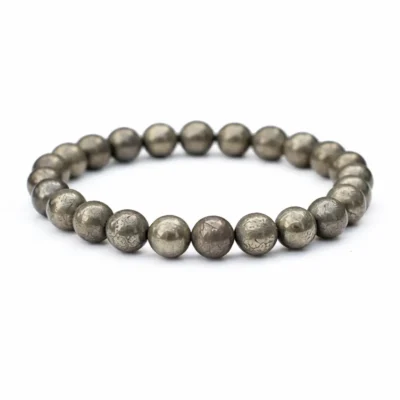 52% OFF
 53% OFF
 29% OFF
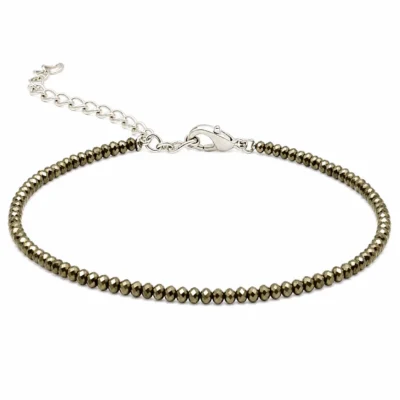 53% OFF
Namaveda is our own store — natural stones, cleansed and energised before dispatch.
Frequently asked questions
How do I check if my crystal bracelet is real?+
No single test proves it. Combine several non-destructive checks: weight compared with plastic, a close look under bright light for natural inclusions and uneven colour, the bead holes for dye or mould seams, a damp cotton bud for dye transfer, and the seller's disclosure. If three or more checks point the same way, you can be fairly confident. Only a gemmological lab can give certainty.
Crystal bracelet asli hai ya nakli kaise pehchane?+
Pehle weight check karein (plastic bahut halka hota hai), phir tez roshni mein beads ko dekhein: asli stone mein thodi unevenness, inclusions aur alag-alag shade hote hain, jabki glass mein gol bubbles aur swirl lines dikhti hain. Bead ke hole mein dye ya mould seam dekhein aur seller se bead list maangein. Ek test par bharosa na karein; kai tests ek saath use karein.
Pyrite asli ya nakli kaise pehchane?+
Real pyrite is brittle, heavy for its size (about 5 g/cm3) and leaves a greenish-black streak on unglazed ceramic. Brass, the usual fake, is a soft yellow metal that is heavier still, leaves a yellowish metallic smear instead of a dark streak, and does not chip or crack like a brittle mineral. Compare the weight, the streak and any chipped facets together.
Is a dyed crystal bracelet fake?+
Not necessarily. Dyeing and heat treatment are widely used on agate, carnelian and others, and it is acceptable when disclosed. It becomes a problem when a dyed or reconstituted stone, such as dyed howlite sold as turquoise, is passed off as a natural untreated one. Ask the seller what was treated.
When should I get a lab report for a gemstone?+
A lab report such as one from GII, IGI or GIA is worth paying for when the stone is precious and the price is high: ruby, emerald, blue sapphire, diamond, yellow sapphire and similar. It is rarely worth it for a Rs 500 to Rs 3,000 bracelet of semi-precious beads, because the report can cost as much as the bracelet.
Not sure this stone is right for you? Check your birth chart in 10 seconds.