Turquoise (Firoza)
Firoza, the sky-blue stone of Persian kings and Indian jewellers, worn traditionally for Jupiter's wisdom and protection.
- Planet
- Jupiter (Guru / Brihaspati)
- Chakra
- Throat, Heart
- Element
- Ether
- Hardness
- Mohs 5 - 6
- Day
- Thursday
- Finger
- Index finger (some traditions use the ring finger)
- Metal
- Silver or gold
- Price
- ₹200 - ₹1,500 per carat for natural stabilised Firoza; ₹3,000 - ₹10,000+ per carat for fine untreated Persian
Turquoise is a copper and aluminium phosphate whose colour runs from robin's-egg blue to sea green, often laced with a web of brown or black matrix. The finest historical material came from Nishapur in Iran, which is why the stone is still called Firoza across India, Iran and Central Asia. Tibet, Arizona, Nevada, Egypt and China also produce distinctive varieties.
Firoza has a long place in Indian and Persian tradition as a protective, auspicious stone, given to travellers and set into Mughal jewellery, sword hilts and rings. In Jyotish it is widely used as an upratna associated with Jupiter (Guru), especially by people who want Guru's blessings of wisdom, good fortune and expansion but cannot wear yellow sapphire. Some astrologers also connect it with Venus and Saturn, so personal advice matters.
Turquoise is porous and relatively soft, which means it absorbs oils, cosmetics and water and can change colour over time. It is also one of the most imitated stones in the world. Dyed howlite and magnesite, plastic and reconstituted powder are everywhere, and even real turquoise is usually stabilised with resin. Buying well means knowing what you are paying for, and our fake-test guide below makes that easier.
Benefits of Turquoise
- Traditionally believed to attract Jupiter's blessings of wisdom and good fortune
- Worn for centuries as a protective talisman during travel
- Associated with clear, truthful and kind communication
- Believed to support calm emotions and a generous outlook
- Considered auspicious for teachers, advisors and spiritual seekers
- Valued as an affordable, wearable Jupiter-linked alternative to yellow sapphire
Turquoise in Vedic astrology
In Jyotish, yellow sapphire (Pukhraj) is Jupiter's primary ratna, and yellow topaz and citrine are common upratnas. Firoza is widely recommended in Indian tradition as another upratna linked with Guru, prized for protection, luck and spiritual growth. Jupiter rules Sagittarius and Pisces and governs wisdom, teachers, children, dharma and wealth. Some lineages also link turquoise with Venus or Saturn, so practice varies. Firoza is generally regarded as a gentle, protective stone and is often worn in silver on the index or ring finger, energised on Thursday with the Guru beej mantra.
✓ Who should wear Turquoise
- Sagittarius and Pisces ascendants seeking Jupiter-themed support
- Aries, Cancer, Leo and Scorpio ascendants where Jupiter is often a functional benefic
- Teachers, counsellors, lawyers and frequent travellers
- People advised to strengthen Jupiter who cannot afford yellow sapphire
✕ Who should avoid it
- Taurus, Libra, Gemini and Virgo ascendants should consult an astrologer before wearing a Jupiter stone
- People wearing diamond or blue sapphire should check compatibility first
- Anyone with a very active lifestyle involving water, sweat or chemicals should consider a pendant instead of a ring
Is Turquoise right for your Lagna?
In Jyotish a stone's suitability depends on which houses its planet (Jupiter) rules for your Ascendant. Tap your Lagna for the full reasoning.
Firoza kaun pahne? (Turquoise kisko pehenna chahiye)
Firoza Jupiter (Guru / Brihaspati) ka ratna hai. Paramparik roop se ye in Lagna walon ke liye anukool maana jata hai: Vrishchika, Dhanu, Meena. In Lagna mein pehle kundli dikhayein: Mesha, Mithuna, Karka, Simha, Kanya, Kumbha. Aam taur par ye Lagna ise nahi pehente: Vrishabha, Tula, Makara. Ye sirf Lagna ka paramparik niyam hai; mahange ratna pehenne se pehle apni kundli kisi yogya jyotishi ko zaroor dikhayein.
How to wear Turquoise
| Finger | Index finger (some traditions use the ring finger) |
|---|---|
| Metal | Silver or gold |
| Day | Thursday |
| Time | Morning, between sunrise and about 11 am, ideally during Shukla Paksha |
| Weight / form | 5-10 carats (Ratti as advised by your astrologer) for a ring; larger for pendants |
| Beej mantra | Om Graam Greem Graum Sah Gurave Namah (108×) |
How to cleanse & charge Turquoise
- Wipe gently with a soft, dry or barely damp cloth
- Smudge with sandalwood or incense smoke
- Rest on a selenite plate or clear quartz cluster
- Brief moonlight charging on a dry windowsill
Avoid: Soaking in water, milk or salt water, which can discolour porous turquoise; Oils, perfume, sunscreen and cosmetics that turn it green over time; Long sun or heat exposure, which can dry, crack or fade the colour.
Best dates to charge: the next Purnima — see the live moon cleansing calendar.
Where to place Turquoise as per Vastu
Direction: North-East · Rooms: Puja Room, Study, Living Room
Keep a Firoza piece in the north-east (Ishan) corner of your puja room or study, the direction traditionally ruled by Jupiter.
How to check if Turquoise is real
Fakes are usually dyed howlite or magnesite, plastic, or reconstituted turquoise powder bound with resin, while block turquoise is often dyed resin with synthetic matrix.
Take the interactive real vs fake crystal test to get an authenticity score.
Turquoise price
Typical price in India: ₹200 - ₹1,500 per carat for natural stabilised Firoza; ₹3,000 - ₹10,000+ per carat for fine untreated Persian. International: $3 - $20 per carat for stabilised stones; $50+ per carat for fine untreated material. Price depends on origin, clarity, colour, size and treatment.
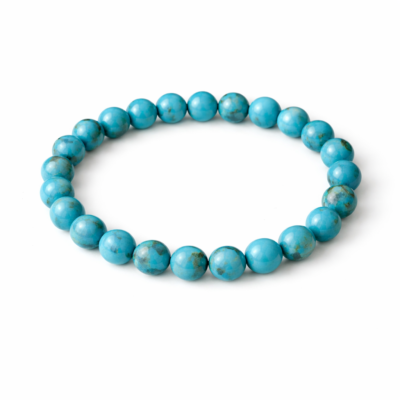
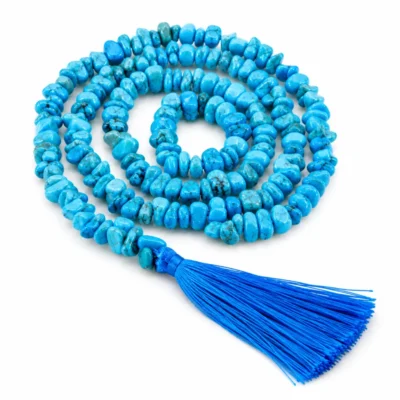
Shop Turquoise
 54% OFF
 54% OFF
Namaveda is our own store — natural stones, cleansed and energised before dispatch.
Turquoise FAQs
Which planet is Firoza (turquoise) associated with?+
In most Indian traditions, Firoza is worn as an upratna linked with Jupiter (Guru), for wisdom, good fortune and protection. Some astrologers associate it with Venus or Saturn instead, depending on their lineage. Because practice varies, it is best to have your chart reviewed to confirm which association your astrologer uses and whether turquoise suits you.
Why is my turquoise turning green?+
Turquoise is porous, so it absorbs skin oils, soap, perfume and moisture. Over time this can shift blue stones toward green. Some people see this as natural character, but you can slow it by removing rings before washing hands or applying cosmetics, and by wiping the stone with a dry cloth after wearing.
Is stabilised turquoise fake?+
No. Stabilisation means natural turquoise has been infused with clear resin to harden it and hold its colour, and most turquoise on the market is treated this way. It is still real turquoise, but it should be disclosed and priced accordingly. Dyed howlite and reconstituted powder are imitations and should cost far less.
Can I wear Firoza in silver?+
Yes. Silver is one of the most traditional settings for Firoza, especially in Persian, Tibetan and Rajasthani jewellery. For Jupiter-focused remedies, some astrologers prefer gold, so ask what your adviser recommends. Either way, choose an open-back or well-sealed setting and keep the stone away from water and chemicals.
Firoza kaun pahne? (Turquoise kisko pehenna chahiye)+
Paramparik roop se Firoza Vrishchika, Dhanu, Meena Lagna walon ke liye anukool maana jata hai. Mahange ratna se pehle kundli dikhana behtar hai.
Not sure this stone is right for you? Check your birth chart in 10 seconds.